
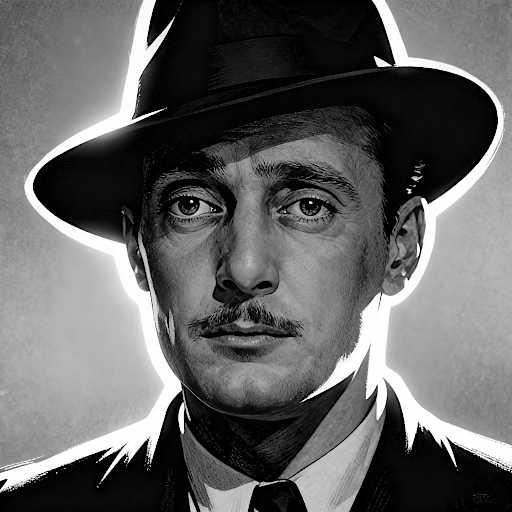
In the golden age of the pulps, when newsprint was stained with adventure and the shadows of the uncanny stretched long across the page, there lived a writer who didn’t need spectacle to haunt the reader. Carl Richard Jacobi was not a writer of loud, crashing explosions; he was a master of the creeping chill, a craftsman of the quiet, persistent dread that lingers long after the lights are turned out.
Born in Minneapolis in 1908, Jacobi’s journey began in the pages of the legends, devouring the cosmic terrors of Poe and the scientific wonders of Verne and Wells. By the time he reached the University of Minnesota, he was already weaving his own worlds, selling homemade “dime novels” to classmates with a precocious hunger for the strange. His professional ascent was marked by a moment of literary lightning: his 1932 debut in Weird Tales, “Mive,” earned the rare and formidable nod of approval from H. P. Lovecraft himself.
While many of his contemporaries chased the fleeting high of sensationalism, Jacobi built a career on atmospheric density. He became a cornerstone of the era’s most iconic magazines—Weird Tales, Startling Stories, and Planet Stories—navigating seamlessly between the cosmic reaches of space opera and the claustrophobic psychological tension of supernatural horror. Whether he was transporting readers to the exotic, sun-drenched landscapes of Borneo or the bone-chilling corridors of “The Unpleasantness at Carver House,” his prose remained anchored in a lived-in, palpable reality.
Yet, behind the weaver of nightmares was a man of grounded discipline. For much of his life, Jacobi balanced the rhythmic demands of professional journalism at the Minneapolis Star with the nocturnal calling of the fantastic. He was a working writer in the truest sense, a steady hand who maintained a prolific output through decades of shifting literary tides.
As one of the final living links to the classic era of Weird Tales, Jacobi’s passing in 1997 felt like the closing of a chapter in science fiction history. But his work, preserved in the celebrated Arkham House collections, refuses to fade. He remains what he always was: a “writer’s writer.” To read Jacobi today is to rediscover the power of subtlety, proving that true mastery lies in how deeply it settles into the soul.