
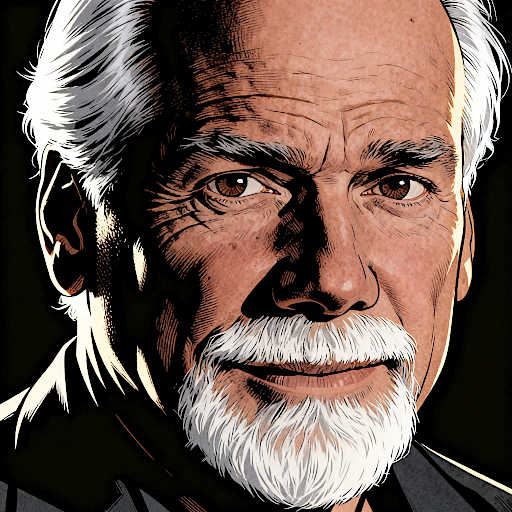
Born in the gritty, boundless landscape of Brooklyn on January 15, 1935, Robert Silverberg’s journey began not among the stars, but in a city of endless possibility. It was here that a voracious childhood hunger for reading met a rigorous academic foundation in English Literature at Columbia University, forging a writer capable of traversing both the furthest reaches of the imagination and the deepest recesses of the human psyche.
Silverberg did not merely enter the science fiction genre; he arrived as a phenomenon. By 1956, he had already claimed his first Hugo Award for “Best New Writer,” marking the ascent of a true literary prodigy. In those early, electric years, he was a force of nature—a writer of superhuman productivity who could churn out a million words a year. Operating under a dizzying array of pseudonyms, including the clandestine Don Elliott, he worked with an assembly-line intensity, collaborating with peers to meet the relentless demands of the pulp era.
Yet, where others found comfort in the established tropes of space opera and technical mechanics, Silverberg sought metamorphosis. Influenced by his classical training and the experimental spirit of the New Wave movement, he began to pivot away from the conquest of outer space toward the conquest of the inner self. He redefined the boundaries of the genre, infusing speculative fiction with the psychological sophistication of modernist literature.
His prose became a vessel for the profound. In Dying Inside, he explored the devastating ache of losing one’s essence; in the lyrical haunting of Nightwings, he captured the beauty of an Earth reclaimed by alien forces; and in Downward to the Earth, he channeled the echoes of Conrad to tell a tale of repentance and rebirth. Whether examining the claustrophobia of overpopulation in The World Inside or using dystopian futures as lenses for social commentary, Silverberg possessed the rare gift of using the “alien” to illuminate the most intimate tremors of the human soul.
His career has been a testament to resilience. Even when faced with shifting markets and personal hardships—necessitating a period of writing everything from historical non-fiction to erotic fiction to sustain his craft—his commitment to excellence never wavered.
A Grand Master of the Science Fiction and Fantasy Writers of America and an inductee into the Hall of Fame, Silverberg stands as one of the primary architects of modern science fiction. He bridged the gap between the pulps and the academy, proving that speculative fiction could be both commercially vital and intellectually uncompromising. To read Robert Silverberg is to realize that while we may gaze at the galaxies, the most enduring frontier remains the human heart.