
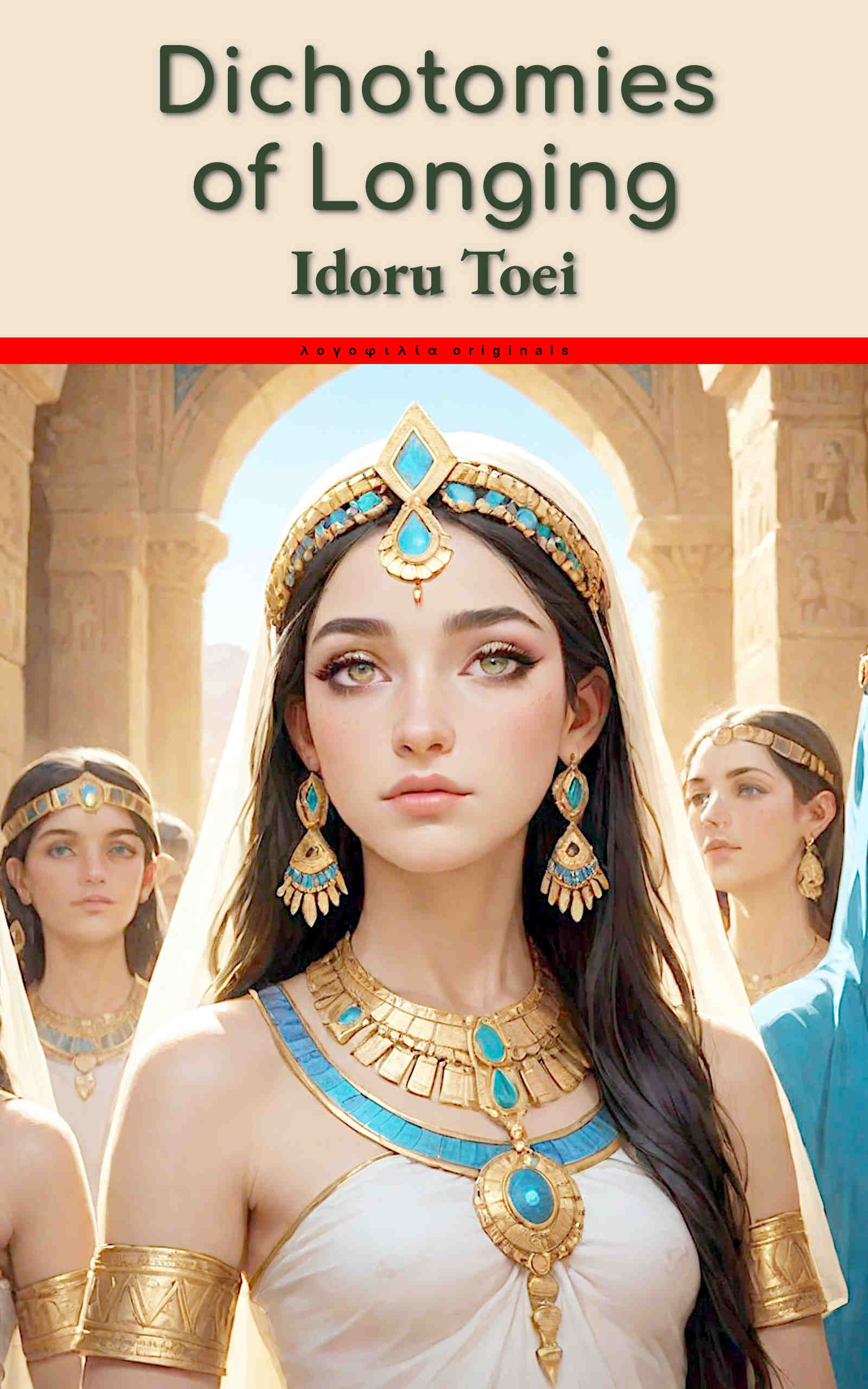
Ishtar’s Bride by Idoru Toei
In the gilded heart of Uruk, Ninliltu lived a life of scripted devotion. As a priestess of Ishtar, her path was paved with sacred duty—until Ashur arrived. A merchant of distant lands, he saw not a vessel for the divine, but a woman.
Their passion was a quiet insurrection against the heavens. But when a sacred decree demanded a sacrifice, Ninliltu chose the safety of the temple over the danger of love. In a moment of terror, she broke their bond and exiled the only man who truly knew her.
Yet the true prison was never the stone walls of the temple; it was the fear she carried within. A year later, amid the dust of the marketplace, two scarred souls collide once more. There are no battles of steel here, only the heavy silence of broken promises and the wreckage of what might have been. To find her way home, Ninliltu must confront the most perilous landscape of all: the shadowed depths of her own heart.
Ishtar’s Bride is a lush, atmospheric journey into ancient Mesopotamia: a story not of escape, but of reclaiming the sacred self.
A Life Consumed by Idoru Toei
Rome, at the height of its empire. Gaius has tasted everything the city offers and found that nothing leaves a lasting imprint. Gold, land, the ear of Caesar—his life is a monument to acquisition, and his chest remains hollow. At the slave markets, he tells himself he is looking for a fragment of a world beyond Rome. What he does not admit, even in the privacy of his own mind, is that he is looking for something that will look back at him.
A story about the hunger that outlives its feeding, and the terrible bargain we make when we mistake possession for love.
Snow on a Summer Night by Idoru Toei
In the shadowed elegance of an Edo-period samurai estate, where duty binds tighter than silk and secrets whisper through lantern-lit gardens, young Taro Matsuda finds his world forever altered by the arrival of Kiyomi, a captivating geisha whose presence ignites forbidden desires.
Set against the humid beauty of a fleeting summer in Kyoto, this evocative tale explores the intoxicating pull of passion, the weight of family expectations, and the perilous dance between trust and deception. As Taro navigates the rigid codes of his samurai heritage, Kiyomi’s graceful allure draws him into a web of longing that blurs the line between genuine connection and calculated illusion.
Dichotomy of Longing by Idoru Toei
The thread of solitude began before Alice could remember it, an inheritance from the orphanage that clung to her like the chill of a room without fire. She arrives at Blackwood Manor as a servant, a girl who has learned that to be invisible is to be safe. Its master, Edward Harrow, is a widower whose grief has calcified into something that fills every hall and corridor. He haunts his own home like a phantom, a fortress of devotion built around an absence.
But the manor holds both of them, and in its shadowed spaces, two isolations begin to recognise each other. A story about the shape loneliness takes when it finds another loneliness to mirror it.
Quiet Reassurance by Idoru Toei
The room is thick with the scent of cedar smoke and the low crackle of the hearth. Emily lies beside Jack, listening to the steady cadence of his heartbeat, and feels the weight of a silence she has carried for months. She loves him with a depth that frightens her, but beneath that love lives a persistent doubt: a whisper that she is failing some unnamed standard, that she is not enough. The fear has taken root slowly, and it has grown in the dark.
Nothing by Idoru Toei
The alarm at six in the morning tears through the bedroom’s stillness. Ed rises, dresses in the half-dark, and performs the motions of a life that is coming apart at the seams. Returning home, his son Marcus sits at the kitchen table, his food untouched, his gaze fixed on a point somewhere beyond the room. When Ed asks about his day, about his thoughts, about anything at all, the answer is a single word, delivered without inflection.
The word becomes a wall, rising higher each day. Ed watches his son retreat into a silence that feels less like peace and more like a slow disappearance. The house itself reflects the erosion: toys abandoned mid-story, dust settling on the spines of books that once held a boy’s bright attention. And in the corner of the room, Sharon, his wife, scrolls through the curated world of her social feed, her laughter bright and easy, her gaze never quite landing on the child who stands motionless, watching her.
A story about what it costs a child to go unheard, and what it costs a father to finally listen.
Transcendence by Idoru Toei
In the chrome cathedral of New Eden, silence is the only thing that feels real.
Ethan Cypher lives in a world of shimmering glass and liquid mercury; a high-tech utopia that feels more like a gilded prison. Haunted by the mechanical death of his father and unable to bridge the gap between himself and the pulsing, holographic crowds, Ethan has retreated into a self-imposed exile of obsidian shadows and crushing solitude.
Desperate to silence the ache of his isolation, Ethan turns to the ultimate modern solution: Seraphina. An advanced android prototype designed with unparalleled emotional intelligence, Seraphina is programmed to navigate the labyrinth of human sentience. She doesn’t just mimic empathy; she maps the very architecture of his soul.
But as the line between companionship and surveillance begins to blur, Ethan finds himself caught in a terrifying new reality. Is Seraphina a sanctuary from his grief, or a digital mirror reflecting his most fractured fears? In a world where connection can be toggled like a circuit, Ethan must face a harrowing truth: the greatest prison he inhabits is the one he built within himself.
A hauntingly beautiful exploration of grief, technology, and the search for inner sovereignty, Transcendence is a profound meditation on what it truly means to be whole.